Origins of Dream State
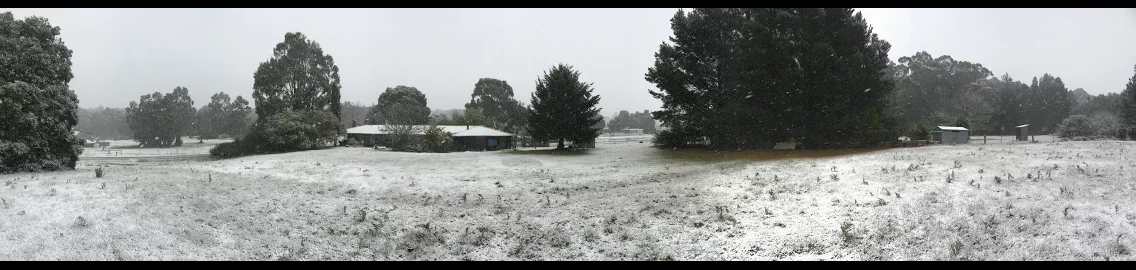
Dream State began in 2014, when I was living in Lyonville, Victoria.
I had a small room that I used as both an art studio and a study. It became a place where I painted, wrote, reflected and tried to make sense of experiences that had shaped much of my adult life.
By then, I had already been given a range of clinical terms to describe those experiences:
psychosis, hallucinations, delusions, symptoms, disorder.
I understood why those words were used and I do not reject clinical language altogether. But I did not want it to be the only language available to me.
My experiences had included fear, confusion, loss of control, hospitalisation and periods where my understanding of reality became very different from that of the people around me. But they had also involved creativity, spirituality, symbolism, heightened meaning and experiences that did not always fit neatly into clinical descriptions.
I wanted a term that could hold both sides.
That was when I began using Dream State.
I chose the name because some of those experiences had felt almost like dreaming while awake. Thoughts, memories, fears, coincidences, voices, spiritual ideas and events in the outside world could begin to feel deeply connected. The boundary between what was happening internally and what was happening around me could become difficult to separate.
Dream State gave me a way to talk about those experiences without having to decide that everything was either illness or insight.
It allowed room for curiosity while still recognising that these states could become overwhelming and, at times, dangerous.
Over time, the term became more than a description of my own experience.
It became a way of thinking about what happens when meaning becomes unusually powerful - when events, thoughts, memories, voices or coincidences begin to carry more significance than they normally would, and when interpretation can gradually move towards certainty.
That question now sits at the centre of the broader Dream State project.
What Dream State became
Dream State has gradually developed into a creative and philosophical project exploring psychosis, voice-hearing, spirituality, memory, creativity, recovery, relationships, peer work and ordinary life.
The work takes different forms - memoir, philosophy, reflective writing, visual art and music - but the same questions continue to appear across them.
How do we take extraordinary experiences seriously without being ruled by them?
How do we remain curious without losing our connection to shared reality?
What can be learned from experiences that were frightening or destabilising without romanticising them?
And how do we return to ordinary life without deciding that everything we experienced along the way was meaningless?
I do not think those questions require a choice between complete belief and complete dismissal.
For me, Dream State sits somewhere between the two.
It is an attempt to remain open to meaning while keeping that meaning connected to reality, relationships, humility and the possibility that we may sometimes be mistaken.
A principle that has gradually emerged from the work is:
Meaning should be carried, not obeyed.
Justin McDermott
I am a writer, artist, speaker and peer worker based in Victoria, Australia.
Much of my work grows from my own experiences of voices, visions, psychosis, spirituality, psychiatric hospitalisation, recovery, creativity and the process of rebuilding an ordinary life.
I write from lived experience, but also from the perspective that comes with time, reflection, peer work and ongoing learning.
Dream State is where these different parts of my life and work come together.
The memoir tells the story.
The philosophy tries to understand some of the processes underneath it.
The Field Notes give me space to explore smaller questions as they arise.
The visual art and music allow me to work with experiences that do not always need to be explained in words.
Together, they are different ways of exploring the same territory.
Beyond the books
Field Notes
Short reflections on voice-hearing, spirituality, loneliness, creativity, recovery, peer work, relationships and the search for meaning.
They give me space to explore ideas that may begin with personal experience but open into broader questions about how we understand ourselves and one another.
Read Field Notes
Gallery
Visual work exploring memory, symbolism, altered states, nature, imagination and the relationship between inner experience and the shared world.
Music
Music allows some parts of Dream State to be expressed through rhythm, voice, atmosphere and story rather than explanation alone.
The questions behind the work
Dream State does not offer a single explanation for extraordinary experience.
Instead, it keeps returning to a set of questions:
What does it mean to break and continue?
Can we listen to unusual experiences without being consumed by them?
How do we carry meaning without allowing it to become sovereign?
What can we keep from difficult experiences and what do we need to let go?
And how do we rediscover the beauty of ordinary life without losing our capacity for wonder?
Dream State is ultimately about trying to hold those questions with curiosity, honesty and humility.
Not the end of wonder.
A way of returning with it.