Dream State
When I say dream state, I’m describing something I experience while awake. Voices, visions, sensations and meaning can become woven into everyday life.
Sometimes a painting, a poem or a recording comes closer to how it felt. This is where I share that work.
What is Dream State?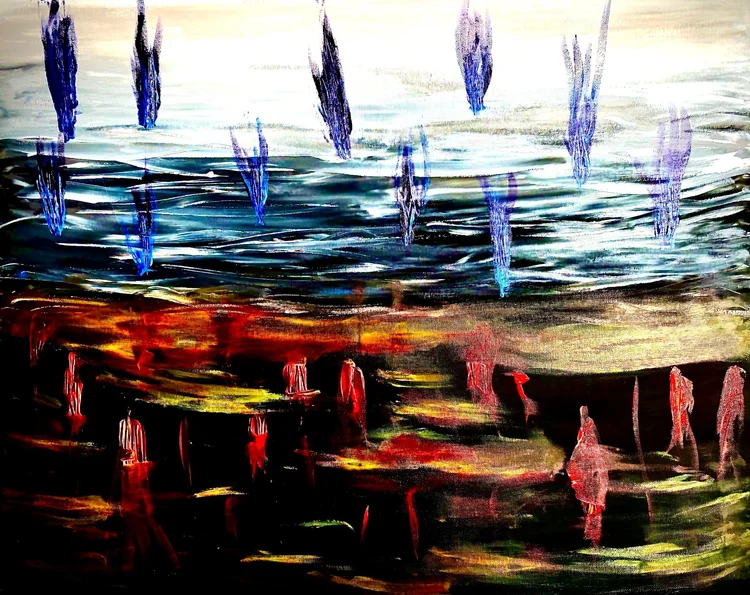
Explore the work
Un-diagnosedFor years, I could tell you my diagnosis more easily than I could tell you what was happening to me.
After the storm, I walked the streets and went into places other people steered clear of. By then I’d faced down my fears and felt pretty much fearless. What concerned me was the fear I sensed in other people when they looked at me. I went out of my way to be peaceful because I didn’t want anyone to be afraid of me.
I could be fearless and still be lost. I felt misunderstood, and I couldn’t always make sense of how people responded to me either. I had little idea where to go or who might understand. Part of what took me to hospital was something quite simple. I thought it was a place where I could see that people still cared. Later, there were times I went because I didn’t want to live anymore.
In hospital, so much of the conversation came back to medication. I could answer questions about whether I was still hearing voices. What was harder to get across was how alone I felt in the world I was experiencing, or how much it would have meant for someone to sit with me long enough to understand a little of it. I still have little time for an approach that paid such close attention to what I was taking and so little to what had brought me through the door. Over several admissions, I kept coming away with the same feeling. These places weren’t for me. I had to find something better.
In Dream State: The Storm Within, I write about the code I carried with me from the night of the storm. Trying to live by it has helped me more than anything.
Love all, be humble, need for nothing, and find others (people like you).
Each one has been a saving grace and a battle within.
Love all is how it began. It’s the strongest part of the code and the hardest to live by. I’d turn on the news, see what one person had done to another and wonder how on earth I was supposed to love them. Then, in an ordinary conversation, I’d catch myself writing somebody off. I was no saint there myself. I believe in humanity, and I keep coming back to what Jesus taught about turning the other cheek. I can condemn a cruel act. What troubles me is how readily hatred for the person can take root in my own heart. As I understand it so far, that’s one way the harm carries on. Some days, trying to love is as far as I get.
Be humble mattered most when I felt least in need of the reminder. There were times I felt so spiritually alive I honestly felt as though I could fly. There were times I felt more righteous than anyone else. That’s harder to admit. The words I needed were there from the start. Be humble. Sometimes that means hearing somebody out when I feel certain I’m right. It took a fair bit of self-belief to be able to say, “I see that differently now,” and still trust my own judgement.
Need for nothing came from how love felt to me then. I was so full of it that, for a while, I felt I had everything I could ever need. That feeling comes and goes. Finding my way back to it, again and again, has been one of the great riches of my life. Even in years when I felt profoundly lost, there were moments I’d gladly live again.
Find others has a bit of what I call “star syndrome” about it. Some of the people I’ve related to most are people I know only through their words and their work. I’ve celebrated with them. I’ve put on a song and let somebody else find the words for what I needed to get off my chest. Recognising something of my own truth in their work helped keep me strong.
I still don’t think I’ve found anyone quite like me. Maybe I never will, and there’s beauty in that too. Staying open to looking has brought friends into my life. A friend might understand one part of my experience, and someone in my family might recognise another. When even a little of it resonates, it brings me peace and breaks that isolation.
I carry this into my peer work. When someone tells me they hear voices, I remember how much those three words left unsaid for me. I want to know what brought that person through the door and what they hoped someone might understand. I know how much it can matter just to see that somebody cares.
I’ve made my peace with the fact that psychiatry is the dominant model. Over the years I’ve learned enough about myself to choose the place it has in my life. I’ve stepped away from regular psychiatric care. These days, if something needs attention, I can take it to my GP, much as I would a physical health concern. That might be once every few years. I still have the drive to reach a point where I never need that kind of help again. If I do, I trust myself to make the appointment.
That’s what Un-diagnosed means to me. I remember what it was like to feel lost and have somebody else’s words be the only way I knew to explain myself. Now I can tell you where I’ve been, what I found worth keeping and what I’m still trying to work out. When I speak about my life these days, I recognise myself in the telling.